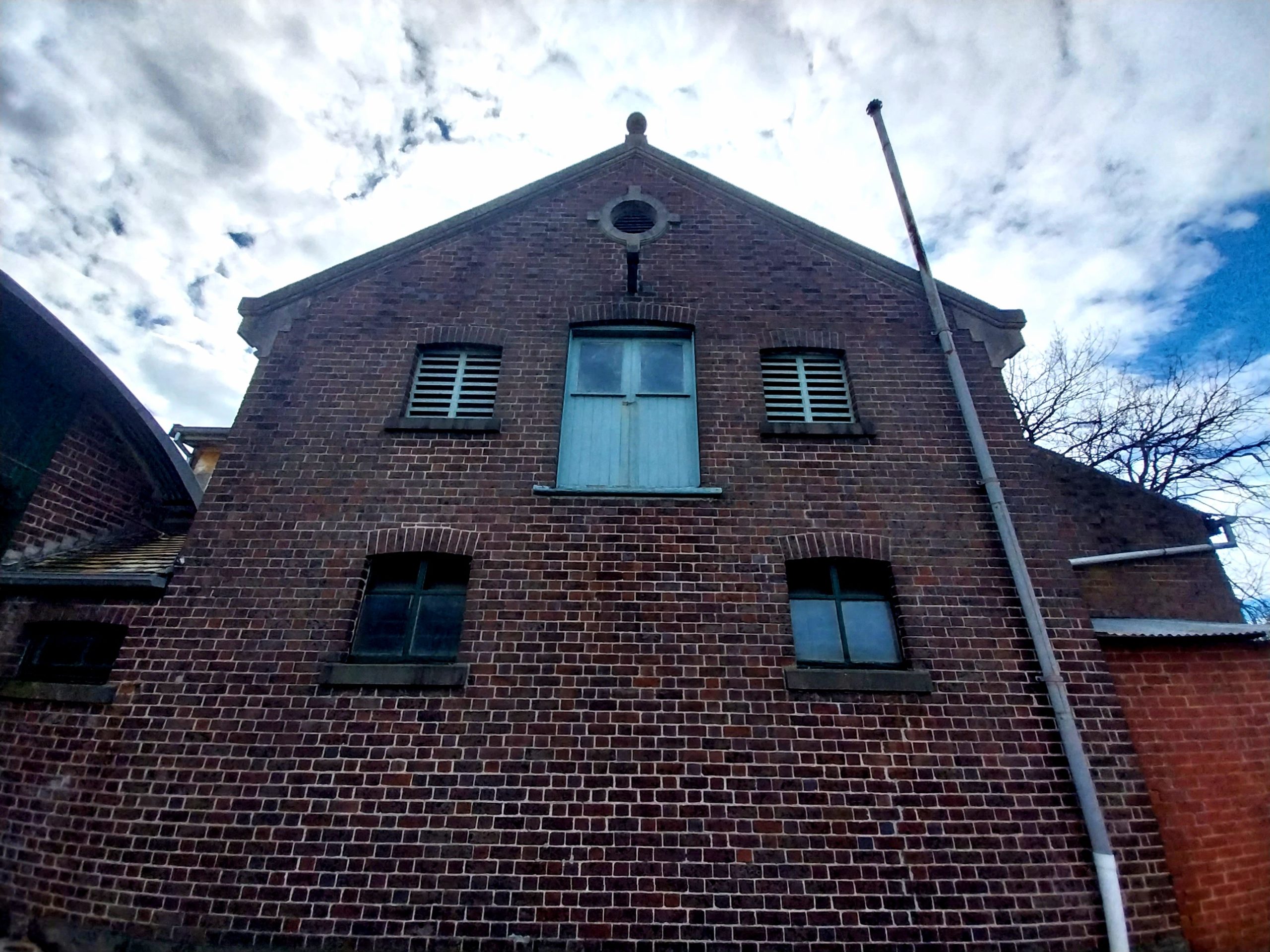
Despite cars replacing horses at Rippon Lea over a century ago, the stables have survived to this day. They are a remarkable time-capsule and remain largely intact.
The first stable building was a simple rectangular structure, built around the same time as the mansion in 1868.
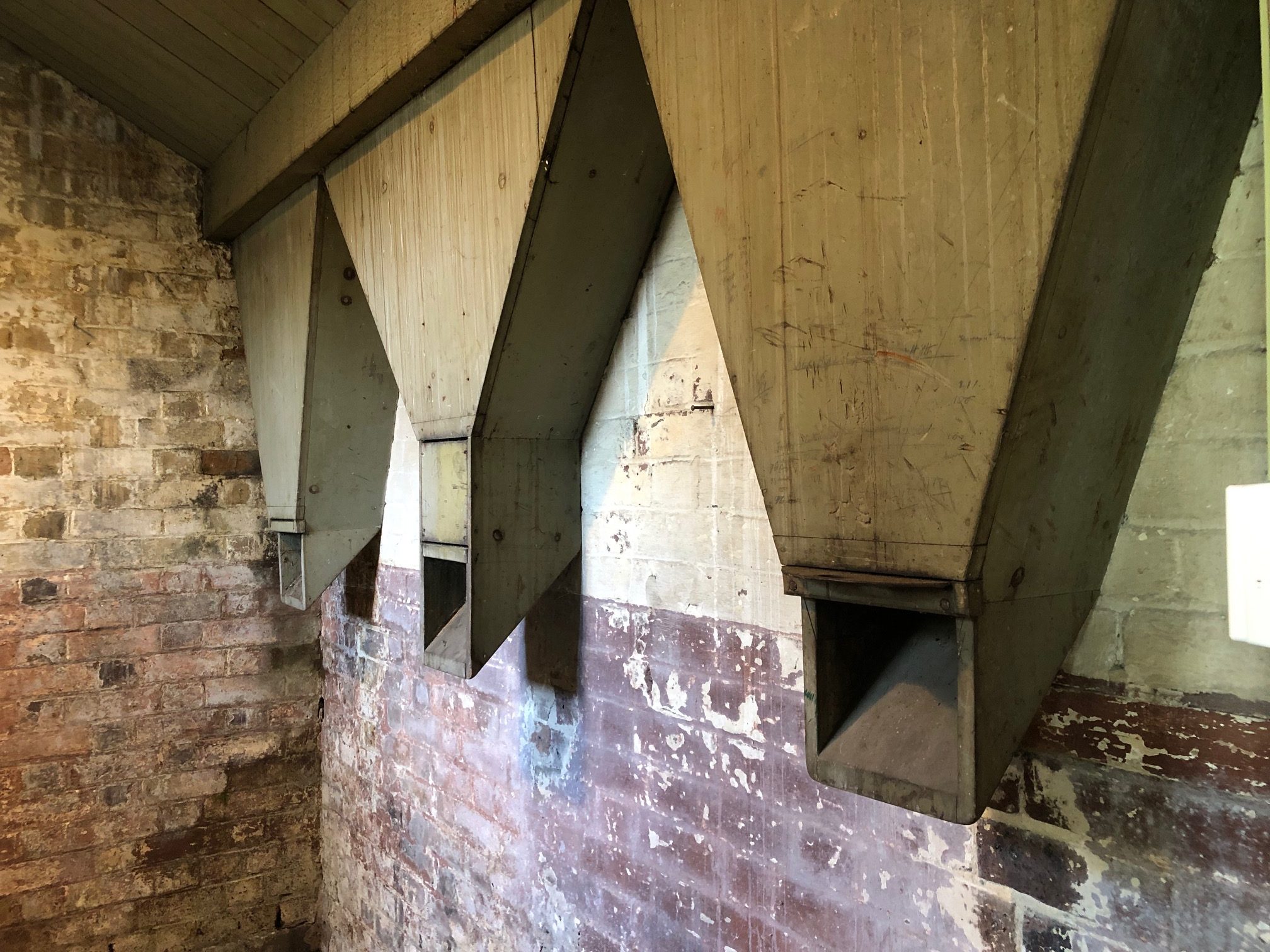
It was added to over the years and by 1903 the complex included five horse stalls, space for six carriages, a harness room, a feed room, a loft bathroom, and a large laundry with drying and ironing rooms.
The Sargood family relied on horse-drawn vehicles, and their stable and buggy house were modern and state-of-the-art for their time. Each of their carriages suited a particular need. For example , a charabanc – a carriage with several benches – was used for picnics.
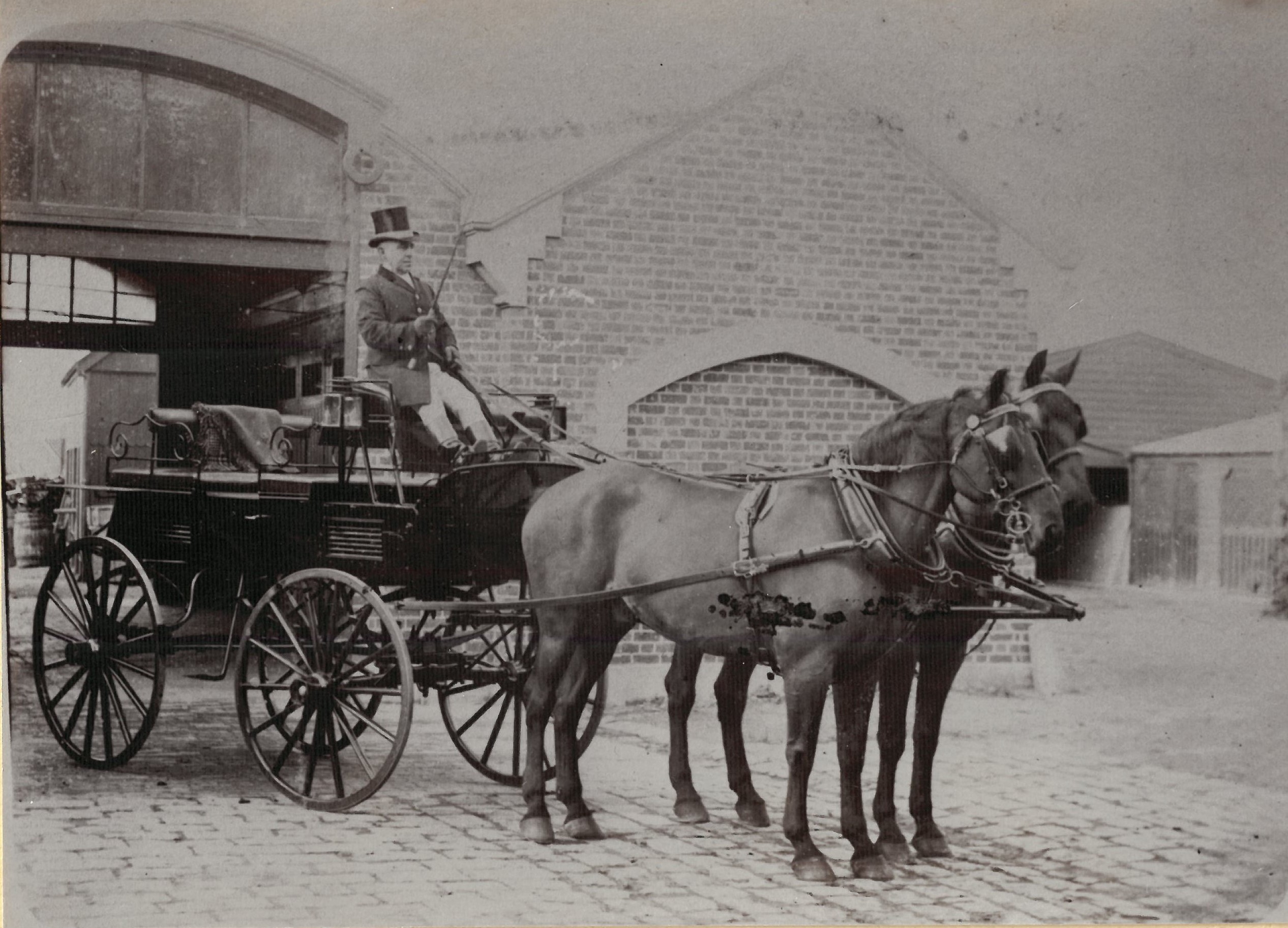
Edward Whybrew, the head coachman, drove the Sargood family. As a member of the Victorian Legislative Council and, after 1901, a Senator in the Federal Parliament, Sir Frederick Sargood was frequently taken into town for business or parliamentary duties. For this, Edward Whybrew would drive either the large carriage drawn by two horses (shown above), or a one-horse brougham.
With the change of the century – and new owners – came a change of function and purpose for the Rippon Lea stables.
The buggy house became a garage where the Jones family kept their cars and boats and the laundry was converted into a chauffeur’s flat in the late 1940s.
Rippon Lea’s last chauffeur – Ken Webb – repaired and maintained the cars, as well as driving the family. After retiring, he continued to live at Rippon Lea until 2010 and, to this day, the former laundry area that was his home is still referred to as “Ken’s Flat” by Rippon Lea staff and volunteers.
Of National heritage significance, Rippon Lea is a grand 19th century mansion complete with a Victorian garden to explore, heritage orchard, lake, childrens playground, fernery and grotto.